Introduction
A brain tumor is an abnormal growth of cells within or around the brain. While not every brain tumor is cancerous, both benign and malignant tumors can affect brain function and require timely medical attention. Early diagnosis can significantly improve treatment outcomes and quality of life.
Many symptoms of a brain tumor can resemble common health conditions, making them easy to overlook. Knowing the warning signs can help you seek medical advice before the condition progresses.
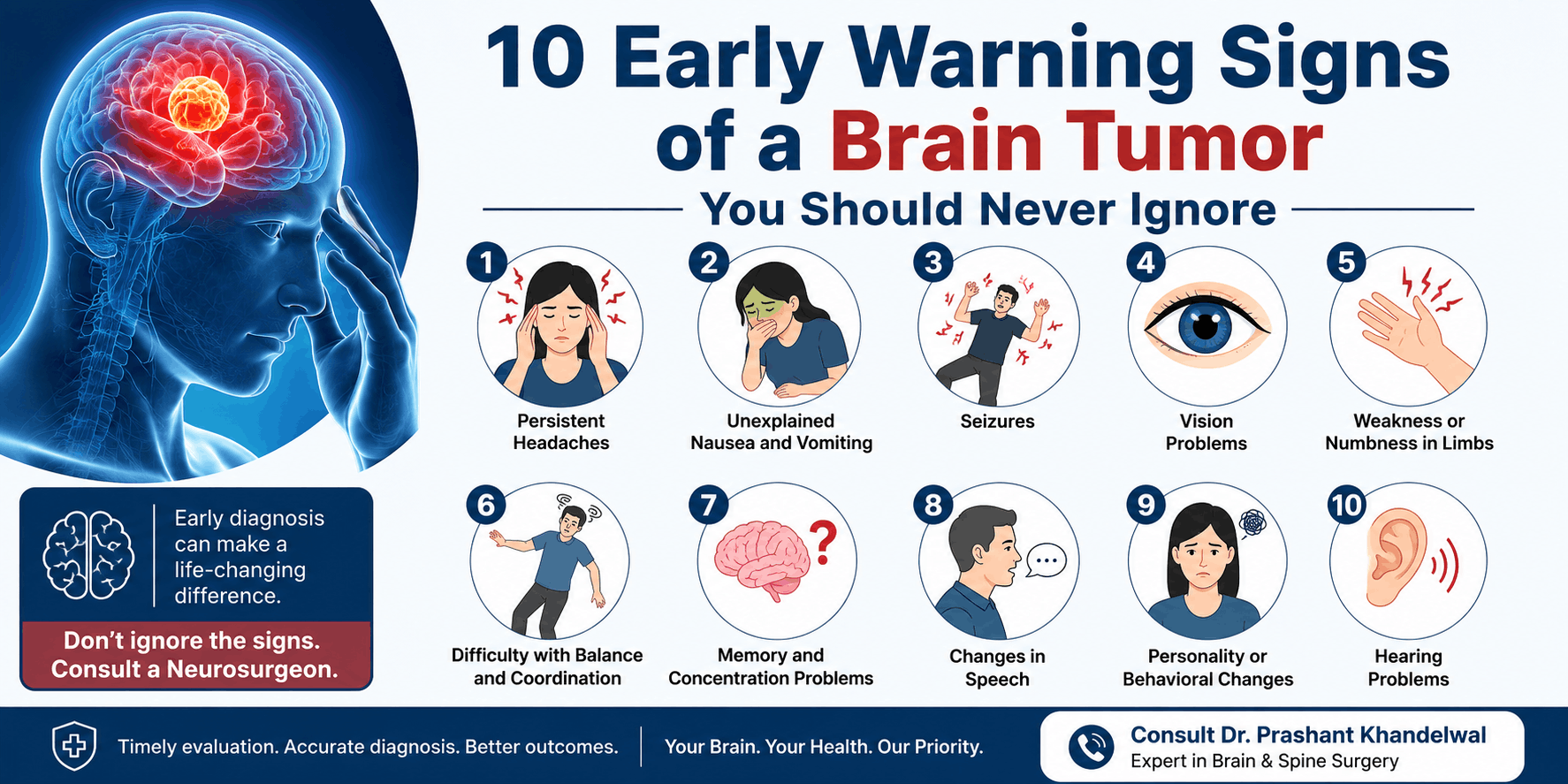
1. Persistent Headaches
Headaches are one of the most common symptoms associated with brain tumors. Unlike ordinary headaches, these headaches:
- Become more frequent over time
- Are often worse in the morning
- May wake you from sleep
- Do not improve with usual medications
If you experience new, persistent, or progressively worsening headaches, it is important to consult a specialist.
2. Unexplained Nausea and Vomiting
Frequent nausea or vomiting without a clear cause, especially when accompanied by headaches, may indicate increased pressure inside the skull. This symptom should not be ignored, particularly if it occurs repeatedly.
3. Seizures
A seizure can sometimes be the first sign of a brain tumor, even in individuals with no previous history of epilepsy.
Symptoms may include:
- Sudden jerking movements
- Temporary loss of awareness
- Unusual sensations or behaviors
- Blackouts
Any first-time seizure requires immediate medical evaluation.
4. Vision Problems
Brain tumors can affect the areas responsible for vision, leading to:
- Blurred vision
- Double vision
- Loss of peripheral vision
- Difficulty focusing
Persistent visual changes should be assessed by a healthcare professional.
5. Weakness or Numbness in Limbs
Weakness, tingling, or numbness in the arms, hands, legs, or face may occur when a tumor affects specific regions of the brain.
These symptoms may:
- Affect one side of the body
- Develop gradually
- Interfere with daily activities
6. Difficulty with Balance and Coordination
Tumors affecting the cerebellum or other motor-control areas can cause:
- Unsteady walking
- Frequent falls
- Poor coordination
- Difficulty performing routine tasks
If balance problems occur without an obvious reason, medical attention is recommended.
7. Memory and Concentration Problems
Changes in cognitive function may include:
- Forgetfulness
- Difficulty concentrating
- Confusion
- Trouble making decisions
Family members often notice these changes before the affected individual does.
8. Changes in Speech
Brain tumors can interfere with language centers, resulting in:
- Slurred speech
- Difficulty finding words
- Problems understanding conversations
- Communication difficulties
Sudden or progressive speech changes should be evaluated promptly.
9. Personality or Behavioral Changes
Some brain tumors can cause noticeable emotional or behavioral changes, such as:
- Increased irritability
- Mood swings
- Depression or anxiety
- Reduced social interaction
- Changes in judgment
These symptoms are often mistaken for stress or psychological issues.
10. Hearing Problems
Tumors located near nerves responsible for hearing and balance may lead to:
- Hearing loss in one ear
- Ringing in the ears (tinnitus)
- Dizziness
- Vertigo
Persistent hearing-related symptoms should not be ignored.
When Should You See a Neurosurgeon?
You should seek medical evaluation if you experience:
- Persistent or worsening headaches
- New-onset seizures
- Unexplained neurological symptoms
- Changes in vision, speech, or memory
- Weakness or numbness in any part of the body
Early diagnosis often involves neurological examination and advanced imaging studies such as MRI or CT scans.
Conclusion
Not every headache or neurological symptom indicates a brain tumor. However, persistent, progressive, or unexplained symptoms deserve proper medical evaluation. Recognizing these warning signs early can lead to timely diagnosis and more effective treatment.
If you or a loved one is experiencing any of these symptoms, consult a qualified neurosurgeon for a comprehensive assessment and appropriate care.
Dr. Prashant Khandelwal specializes in advanced brain and spine surgery, minimally invasive neurosurgery, neuroendoscopy, skull base surgery, and vascular neurosurgery, providing expert diagnosis and treatment for complex neurological conditions.